
Sustainable Investments in the Amazon, Volume II
Volume II of the guide "Sustainable Investments in the Amazon" is now available
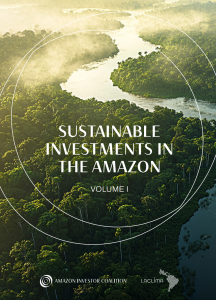 Investing in the Amazon means investing in the future. For those who approach the region strategically, it also represents an opportunity for solid and sustainable financial returns. The Amazon holds unique assets: strong scientific and technological capacity, skilled professionals, an active private sector, vast biodiversity, traditional knowledge, and valuable ecosystem services. At the same time, global markets increasingly demand value chains that combine quality with social and environmental integrity. When investors engage with local realities and build genuine partnerships with communities and institutions, socio-environmental risks can become sources of legitimacy and operational stability. This is what transforms responsible investment into a competitive advantage.
Experience across the region shows that when conservation outcomes are combined with investments in local capacity and governance, positive economic effects follow. These approaches strengthen production systems, increase income opportunities, and create a cycle in which financial returns and social impact reinforce one another. In this context, the Amazon offers a clear opportunity to generate long-term value.
The region now sits at the center of global debates on the green transition and climate justice. While the first volume of this series examined why investing in the Amazon matters and identified key barriers, this second volume focuses on how to move from principles to practice by presenting tools and approaches adapted to territorial realities.
Prepared by the Amazon Investor Coalition in partnership with the LACLIMA Institute, this guide is designed for investors, public officials, companies, civil society organizations, and community leaders interested in understanding the practical, legal, cultural, and institutional dimensions of sustainable investment in the Amazon. It proposes a decision-making framework grounded in local contexts, showing how the concept of a “standing forest, standing economy” can become a practical investment strategy.
The Amazon therefore represents not only an environmental priority but also a strategic economic opportunity. Investors who align their portfolios with legitimate local partnerships, appropriate financial instruments, and clear impact metrics can achieve competitive returns while contributing to a more sustainable economy.
For investments to be truly sustainable, however, the Amazon must also be heard. Development strategies should emerge from the voices and knowledge of those who live in the region. As Ailton Krenak reminds us, postponing the end of the world is a shared responsibility. Transforming the Amazon’s natural and cultural wealth into regeneration and shared prosperity requires listening, partnership, and long-term commitment. This guide is an invitation to take part in that effort.
Powered By EmbedPress
