
 Global narratives about the Amazon often oscillate between two extremes: an untouched natural paradise or an immense frontier of untapped resources. While these images capture international attention, they overlook the region’s true complexity. The Amazon is not a monolithic landscape but a vast territory where diverse peoples, ecosystems, productive systems, and sociopolitical dynamics coexist. When investment strategies ignore these realities and rely on externally designed models with little engagement with local actors, initiatives frequently underperform or produce unintended consequences.
For this reason, responsible investment in the Amazon must begin with approaches rooted in the region’s own contexts. Strategies need to acknowledge cultural diversity, environmental variability, and the distinct decision-making structures that guide many forest communities. Only by grounding initiatives in these realities can investments contribute to a development pathway that balances economic opportunity with the preservation of standing forests and the well-being of the people who depend on them.
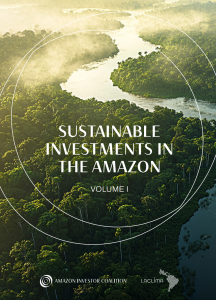
In this spirit, the Amazon Investor Coalition, in collaboration with the LACLIMA Institute, presents the Guide on Responsible Investments in the Amazon. The publication draws on interviews with a broad range of stakeholders working across the region, complemented by document analysis and an extensive literature review. Together, these sources consolidate decades of accumulated knowledge on how financial resources can be directed toward initiatives that simultaneously generate socioeconomic benefits, protect forests, and advance climate justice.
The guide seeks to connect different forms of knowledge and action—linking financial capital, scientific research, and traditional wisdom. Its objective is not only to present principles but also to encourage their practical application. In doing so, it calls on investors, policymakers, and practitioners to collaborate in building a bioeconomy that is inclusive, resilient, and rooted in the realities of the Amazon.
Ultimately, this document is both a resource and an invitation. Investing in the Amazon requires more than financial commitments; it demands attentive listening, respect for local rhythms, and partnerships that recognize the leadership of communities living in the forest. The reflections gathered here aim to inform decisions that align economic returns with community empowerment and the protection of one of the world’s most significant socio-environmental regions.
Echoing Eduardo Galeano’s reflection on the “open veins” of Latin America—where natural abundance historically became a source of exploitation—we argue that the Amazon can chart a different path. By replacing extractive narratives with strategies that transform the region’s natural and cultural wealth into shared prosperity, the Amazon can become a model of regeneration for its peoples, forests, and future generations.
Read the publication below:
